 The
Extraordinary Secrets of April, May, & June The
Extraordinary Secrets of April, May, & June
by Robin Benway
Ages 12–up
In the year of their parents’
divorce, three high-school sisters rediscover their
secret childhood powers: April can see the future,
May can vanish, and June can read minds. At first the
three use their powers to navigate the troubled waters
of a new school, but when April foresees a disaster,
the three work together to use their powers for a higher
purpose. Narrated in turn by each of the sisters, this
funny book celebrates the power of sisterhood. |
|
 Pink
Smog: Becoming Weetzie Bat Pink
Smog: Becoming Weetzie Bat
by Francesca Lia Block
Ages 14–up
In this prequel to Weetzie
Bat, we meet Louise as a 7th grader. When her father
suddenly leaves for New York City, she must cope with
her own grief as well as her mother’s depression. It
doesn’t help that she faces a clique of mean girls at
school and the sinister family in Unit 13 of her condominium.
Anonymous notes, an attractive older boy, and two new
friends who are also outcasts help Louise transform herself
into Weetzie, the artist. |
|
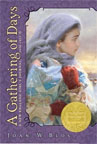 A
Gathering of Days: A
Gathering of Days:
A
New England Girl’s Journal, 1830-32
by Joan W. Blos
Newbery Medal 1980
Ages 9–12
This novel is written in the form of
a diary kept for a year by Catherine Cabot Hill, a 13-year-old
girl in New Hampshire. Catherine’s mother has died, and she must
keep house for her father and younger sister. During the year,
Catherine undergoes school discipline, encounters runaway slaves,
loses a friend, and faces new relationships when her father remarries
a woman with children of her own. |
|
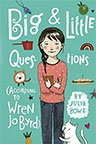 Big & Little Questions Big & Little Questions
by Julie Bowe
Ages 10–14
After her parents tell her they are divorcing, Wren Jo Byrd (9) is sent to spend the summer with her grandparents. When she returns for the start of the next school year, she is worried that everyone will find out. She doesn’t tell anyone the truth, not even her best friend Amber or her new teacher. Marianna, the new girl in town, wants Amber for her best friend, and Wren is compromised by the secret she is hiding. Then Wren learns that Marianna had to ask the same questions that Wren is worrying about now. |
|
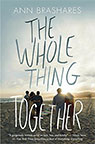 The Whole Thing Together The Whole Thing Together
by Ann Brashares
Ages 14–up
Before Ray’s parents met, Ray’s mother was married to Robert and had three daughters, his half-sisters Emma, Mattie, and Quinn. Robert also remarried and has a daughter Ray’s age named Sascha. Both families share a summer house on Long Island since neither Ray’s mother nor Robert were willing to give it up. On alternating weeks, Ray and Sascha, who he has never met, stay in the same bedroom at the summerhouse. One summer Emma gets engaged, Mattie discovers a family secret, and Ray finally gets to meet Sascha. This funny and tragic novel explores the long-held grudges of split families. |
|
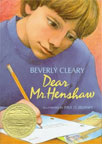 Dear
Mr. Henshaw Dear
Mr. Henshaw
by Beverly Cleary
Newbery Medal 1984
Ages 8–12
Leigh begins writing to Mr. Henshaw,
an author, when he is in 2nd grade as a school assignment. Leigh
is lonely and unhappy. He’s the new kid in town with recently
divorced parents, his lunch is stolen every day, and he doesn’t
even have a dog. Mr. Henshaw writes back and encourages Leigh
to keep a journal to express his feelings. This outlet allows
Leigh to slowly develop confidence in himself. The reader will
enjoy watching Leigh’s writing improve over the four years covered
in the book. |
|
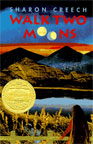 Walk
Two Moons Walk
Two Moons
by Sharon Creech
Newbery Medal 1995
Ages 10–14
Salamanca Tree Hiddle’s mother leaves
home on a spiritual quests, but promises to return. She doesn’t,
and Sal and her father move from Kentucky to Idaho. Her new friend
Phoebe is also 13 and also has a mother who vanished. Sal convinces
her grandparents to drive to Idaho in search of her mother while
telling the story of Phoebe. Sal’s journey through the grieving
process of denial, anger, and acceptance is presented realistically
and with compassion. |
|
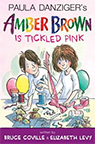 Amber Brown Is Tickled Pink Amber Brown Is Tickled Pink
by Paula Danziger, Bruce Coville, Elizabeth Levy, Tony Ross
Ages 8–12
Amber Brown (9) is thrilled that her divorced mother is marrying Max, but uneasy because Dad isn’t part of the celebration. Amber can’t wait to be Best Child, but she can’t find the right dress, Mom and Max can’t agree on how much to spend on the wedding, and Dad keeps making mean comments about Max. Luckily Amber is up to the task of negotiating between her parents and finding just the right wedding location that both Mom and Max will love. Bruce Coville and Elizabeth Levy do a fine job of continuing the saga of Paula Danziger’s beloved Amber Brown. |
|
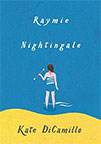 Raymie Nightingale Raymie Nightingale
by Kate DiCamillo
Ages 10–up
Raymie Clarke is crushed when her father runs off with a dental hygienist in 1975. She decides that if she can win the Little Miss Central Florida Tire competition and get her picture in the paper, her father will see it and come home. To win, Raymie has to learn to twirl a baton and to do good deeds. Her competition is Louisiana Elefante, a wispy orphan who claims to be the daughter of the famous Flying Elefantes, and Beverly Tapinski, a fierce girl who vows to sabotage the contest. Tragedies have influenced all three girls, and as the contest grows closer they gradually begin to trust and rely on each other. |
|
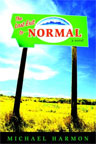 The
Last Exit to Normal The
Last Exit to Normal
by Michael Harmon
Ages 14–up
When 17-year-old Ben’s father announces
he’s gay and the family splits up, Ben figures it can’t
get worse. But then his father and boyfriend move with
Ben from big-city Spokane to a rural Montana town—no
place for a boy with spiked hair, a skateboard habit, and
two dads. |
|
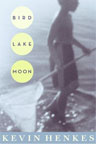 Bird
Lake Moon Bird
Lake Moon
by Kevin Henkes
Ages 10–14
Mitch (12) is brooding about
his parents’ upcoming divorce when he meets Spencer (10)
who has been shaken by a drowning at Bird Lake. Told
in alternating chapters from both viewpoints, this novel
explores secrets, loss, and acceptance of what cannot
be changed. |
|
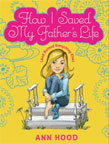 How
I Saved My Father’s Life How
I Saved My Father’s Life
(and
Ruined Everything Else)
by Ann Hood
Ages 11–up
Madeline (11) believes she saved
her father from an avalanche, and is hoping for another
miracle to undo her parents’ divorce and father’s remarriage.
Perceptive view of divorce from a child’s perspective. |
|
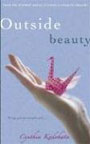 Outside
Beauty Outside
Beauty
by Cynthia Kadohata
Ages 12–up
When 12-year old Shelby’s beautiful
mother is critically injured in a car crash, Shelby and
her three sisters are parceled out to their four different
fathers. As Shelby plans to reunite the sisters, she
begins to appreciate her father’s kindness and begins
to understand the difference between beauty and perfection. |
| |
|
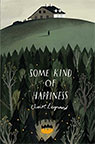 Some Kind of Happiness Some Kind of Happiness
by Claire Legrand
Ages 8–12
Finley Hart (11) is sent to spend the summer with the grandparents she has never met while her parents finalize their divorce. Finley’s escape from the sadness that often overwhelms her has been the magical forest kingdom of Everwood, which she created and recorded in her notebook. While exploring the woods behind her grandparents’ country estate, Finley discovers that Everwood is real, and more mysterious than she ever imagined with a family of pirates and a wizard living in a house constructed of bones. As she allows her cousins into her imaginary world, the mysteries increase and the sadness grows. Her quest to understand the secrets of her family helps her understand why her father avoids his relatives and that a family sticks together through good times and bad. |
|
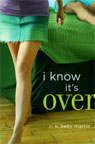 I
Know It’s Over I
Know It’s Over
by C.K. Kelly Martin
Ages 14–up
Still coping with his parents’
divorce, 16-year-old Nick is stunned when his ex-girlfriend
Sasha tells him she is pregnant. Nick struggles to
do the right thing by Sasha. His pain and uncertainty
are portrayed with frankness in this emotionally complex
coming-of-age story. |
|
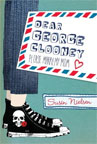 Dear
George Clooney: Please Marry My Mom Dear
George Clooney: Please Marry My Mom
by Susin Nielsen
Ages 11–14
Violet (12) is devastated when
her TV-producer father leaves their run-down home in
Vancouver and moves to Los Angeles to marry an actress
and live in a fancy house with a pool. Violet is angry,
her younger sister Rosie reverts to bed-wetting, and
her mother begins to date one loser after another.
When her mother begins to date Dudley Wiener, Violet
and her friend Phoebe decide to take matters into their
own hands. Since Violet’s mother can’t find a decent
man herself, they decide to set her up with George
Clooney. Violet’s attempts to sabotage her mother’s
relationship with Dudley are hilarious, while her struggles
to accept her father’s new life are realistically poignant. |
|
 Dogtag
Summer Dogtag
Summer
by Elizabeth Partridge
Ages 8–12
Tracy (12) has always felt
different. In Vietnam she was mocked because her father
was an American soldier, and she doesn’t fit in with
her adoptive family in California either. Then Tracy
and her friend Stargazer find a dogtag in her father’s
ammo box, which sets of a chain of reactions causing
painful memories and misunderstandings. Tracy struggles
to balance her memories of her natural mother with
building a relationship with her father’s wife as her
step-mother tries to understand the memories haunting
both her husband and adoptive daughter. Includes an
historical appendix and a teacher's guide for discussing
the book in the context of a unit about Vietnam. |
|
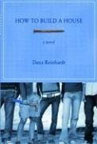 How
to Build a House How
to Build a House
by Dana Reinhardt
Ages 12–up
Harper Evans is shaken by her
father’s second divorce and her separation from her beloved
stepmother and best friend stepsister. Participating
in a summer program to build a house for a needy family
helps Harper see how both houses and relationships can
be resurrected through hard work, hope, and teamwork. |
|
 My
So-Called Family My
So-Called Family
by Courtney Sheinmel
Ages 9–12
When Leah Hoffman-Ross’s family
moves to New York shortly before the start of the 8th
grade year, she decides to try and pass as normal, instead
of the child of Donor 730 from a Maryland sperm back.
Her mother thinks her new stepfather and little brother
should be all the family she needs, but Leah finds the
database of the sperm registry and discovers she has
a half-sister her own age. This thought-provoking book
encourages readers to think about what really makes a
family. |
|
 Dream On, Amber Dream On, Amber
by Emma Shevah, Helen Crawford-White
Ages 9–12
Amber Alessandra Leola Kimiko Miyamoto (11) finds it confusing to be both Italian and Japanese. What’s worse is that her Japanese father abandoned the family years ago, leaving both Amber and her younger sister Bella angry and hurt. So Amber creates an imaginary father to listen to her secrets and writes letters to Bella from this pretend father, busy on secret agent missions around the world. |
|
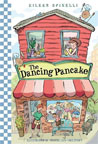 The
Dancing Pancake The
Dancing Pancake
by Eileen Spinelli, Joanne Lew-Vriethoff
Ages 8–12
Bindi (11) had a normal and
happy life until her parents announced they were separating.
After her father moves to another city, Bindi’s mother
and aunt open a diner, The Dancing Pancake, to make
ends meet. Told entirely in verse from Bindi’s perspective,
this accessible book presents Bindi’s struggles to
deal with her new reality and her wildly changing emotional
state in a light-hearted way. |
|
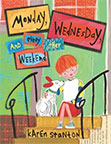 Monday, Wednesday, and Every Other Weekend Monday, Wednesday, and Every Other Weekend
by Karen Stanton
Ages 3–6
Henry Stanton and his dog Pomegranate live in two houses. One Mondays, Wednesdays, and every other weekend they live with Mama in her new apartment, and on Tuesday, Thursday, and every other weekend they live with Papa in his new house. Henry finds things to enjoy at each house, but Pomegranate always wants to be somewhere else. Finally Pomegranate runs away to what he considers home, the place they all used to live together. This sensitive book deals with the changes brought by divorce in a very reassuring way. |
|
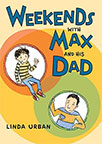 Weekends with Max and His Dad Weekends with Max and His Dad
by Linda Urban, Katie Kath
Ages 6–9
Third grader Max Leroy spends weekends with his father when his parents get divorced. The first weekend together Max transforms himself into Agent Pepperoni and his father into Agent Cheese and the two form a new bond as they play spy. On later weekends Max helps his father meet his new neighbors and buy new furniture. This funny story portrays an imaginative child working through a difficult transition to form a new relationship. |
|
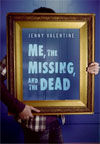 Me,
the Missing, and the Dead Me,
the Missing, and the Dead
by Jenny Valentine
Ages 14–up
Fifteen-year-old Lucas finds
an abandoned urn of ashes in a London cab depot and discovers
the truth about the disappearance of his father five
years earlier. This British novel raises questions about
death, euthanasia, and broken families while retaining
a healthy sense of humor. |
|
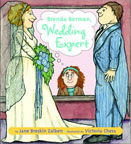 Brenda
Berman, Wedding Expert Brenda
Berman, Wedding Expert
by Jane Breskin Zalben, Victoria
Chess
Ages 6–9
Headstrong Brenda is crushed
when her favorite uncle announces that he is getting
married, especially when she learns that the bride
does not intend to attire the flower girl in gold
lamé. And worst of all, Brenda will have to
share that starring role with the golden-curled niece
of the bride. This early chapter book pairs lively
text with amusing watercolor illustrations that perfectly
capture our heroine’s facial expressions. |
|
|